
Photo Credit: Mo McIntosh
When most people picture forestry infrastructure, debris catchers probably aren't the first thing that comes to mind.
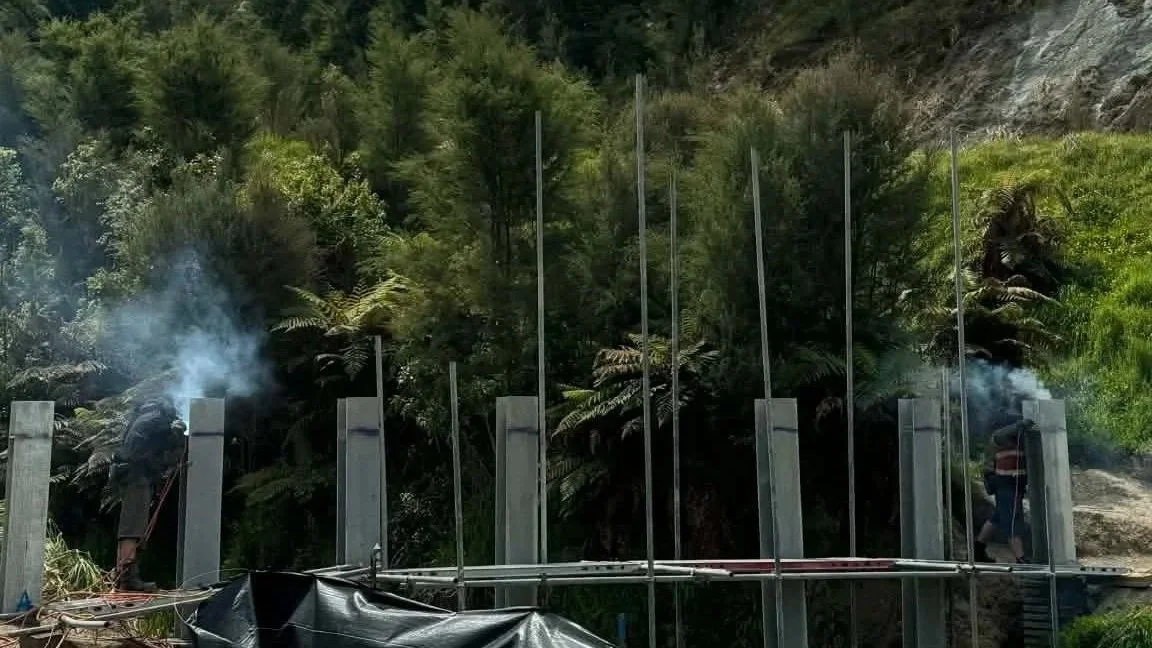
But at West Ho Forest, Kuru's Civil team is working on a project with an important purpose: constructing a network of six debris catchers designed to intercept woody debris moving through catchments during high-flow and heavy rainfall events.
Engaged by Ernslaw One, the project forms part of a much wider picture of how forestry management and operations across Te Tairāwhiti are responding to environmental risk and thinking about what happens when material moves from the hills and catchments above into the waterways and areas below.
For Kuru, it is also another opportunity for our people to take on something different and meaningful, while building capability through the mahi.
What Is a Debris Catcher?
A debris catcher is exactly what the name suggests. It is a structure positioned within a catchment to help intercept and retain woody material moving downstream during high-flow events. Constructing one involves considerably more than putting the finished structure in place.
At West Ho Forest, the work around the project has involved establishing and maintaining access, preparing work areas and foundations, managing machinery and materials, installing the catchers, maintaining environmental controls and ultimately stabilising the areas around the structures.
The first site was underway by early April 2026, with Kuru's Operations records showing the Ernslaw One debris catcher project active within the Civil programme.
More Than What You See at the End
Like many Civil projects, much of the work happens before the finished structure ever starts to take shape.
There are roads to maintain, machinery to move, materials to get into place and works to coordinate safely around waterways and changing site conditions.
The supporting plant and resources involved, include metal trucks, a CAT 140M2 grader, CAT CS56B compactor and skilled labour associated with the West Ho Forest debris catcher installation and road maintenance work. It means the project draws on more than one capability.
Earthworks, roading, transport, machinery, construction, environmental management and project coordination all have a role to play and behind all of that are the people making it happen.
Working Around Our Waterways
One of the most important parts of this project is not only what we are building, but how we are building it.
Because the debris catchers sit within catchments and around waterways, environmental planning has been built into the work.
As with any of our projects, Environmental Management Planning includes site-specific erosion and sediment controls, identification of flow paths and runoff directions, access and laydown areas, and the staging of work so multiple sites are not unnecessarily opened at once.
There are also controls around pumping and discharges, along with environmental inspections during active works. Debris catchers are checked during the work where practicable and following rain events.
Ecology is part of that approach too, with pre-work checks and stop-work triggers if tuna, nesting birds or other taonga species are encountered. These might not be the parts of the project people notice when they look at a completed debris catcher but they are an important part of doing the mahi responsibly.
Building Capability Through the Challenges
Not everything about the West Ho Forest project has been straightforward and that is part of the story too.
Our crews have had to problem-solve, work with different parties, understand new construction requirements and adapt as issues are identified. All while working under forestry conditions which is a new experience for some of our Civil staff.
Each challenge that gets worked through becomes experience that can be taken into the next structure, the next site and the next project.
The People Behind the Project
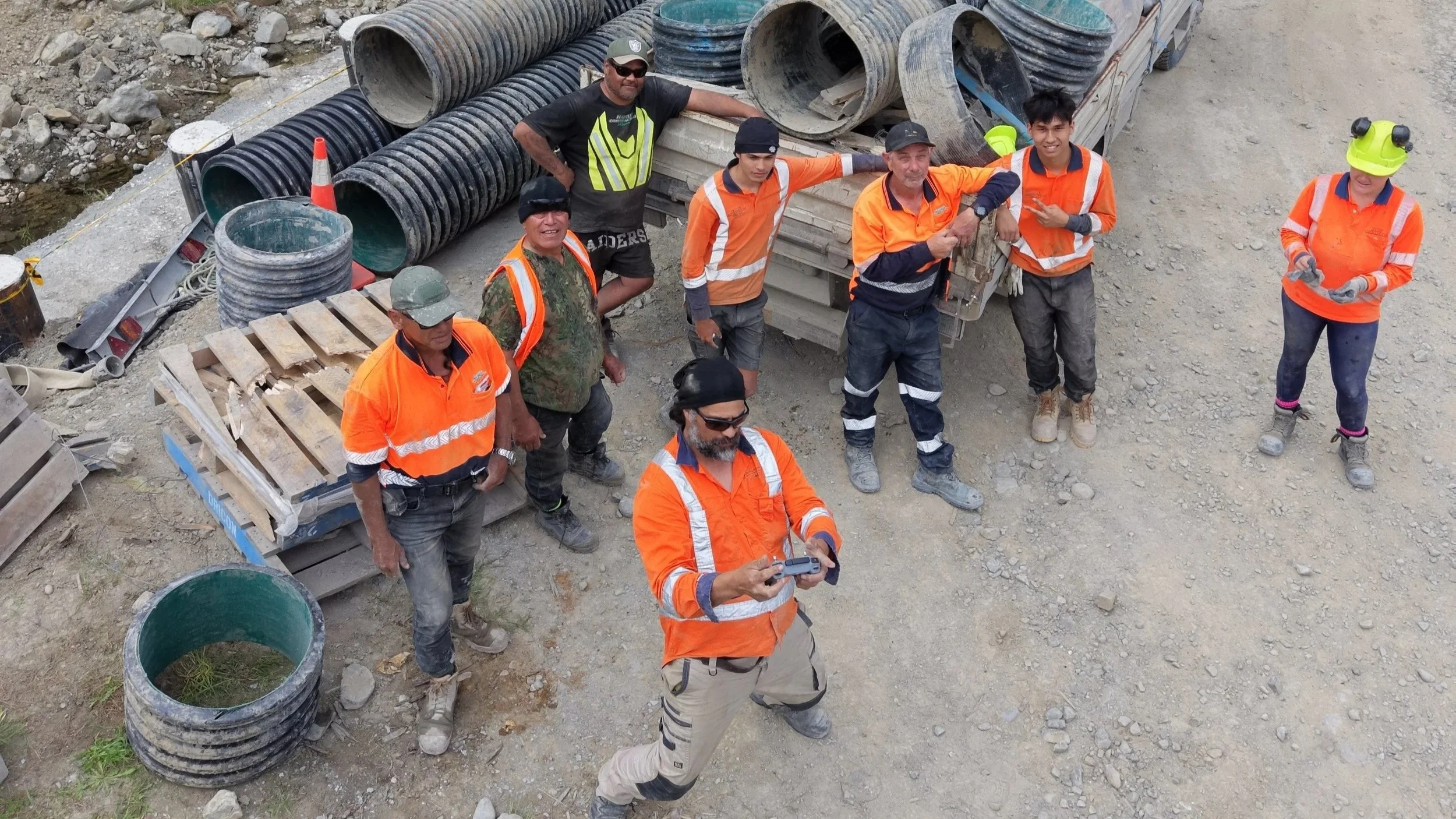
Photo credit: Jordan Hailey (Roading Crew Foreman)
Like our Rukuata Forest LWD project, the real story behind West Ho Forest is the people doing the mahi.
Our Ūawa Workshop Crew, committed in support of the debris catcher works later in the programme, while the wider project has required coordination across our Civil teams.
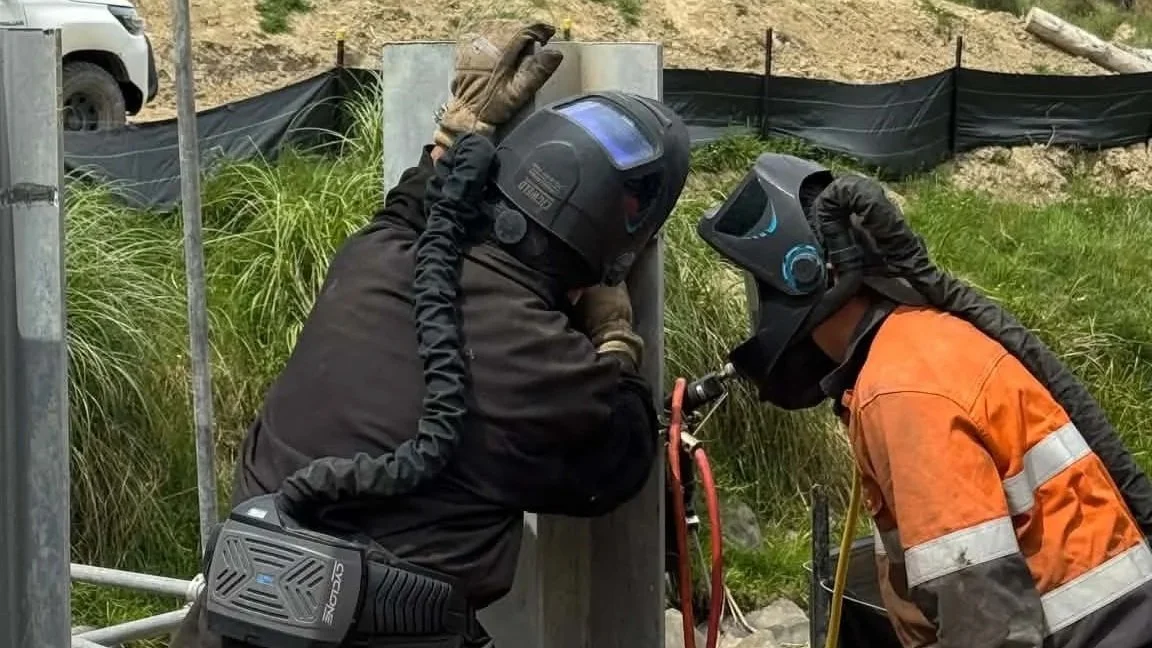
Photo credit: Mo McIntosh (Engineer - Ūawa Workshop)
A March handover meeting brought together representatives from Civil and wider Kuru operations as the project moved into construction and that wider support matters as the people you see physically constructing the debris catchers are a key part of the project. Behind them are the people maintaining roads, shifting machinery and materials, coordinating works, dealing with engineering and fabrication questions, maintaining equipment, monitoring environmental requirements and making sure the next stage is ready to go.
That's often the Kuru story behind a project. Many different people, doing different jobs that are contributing to the same outcome.
Building for What Comes Downstream
Ultimately, this project has a purpose much bigger than the individual structures going into the ground.
Recent years have brought a much greater focus across Te Tairāwhiti on how forestry debris is managed and what can be done to reduce the risks associated with material moving through our catchments during severe weather.
Debris catchers are one part of that wider response.
They cannot remove every risk associated with severe weather or forestry debris. What they can provide is another layer of protection, designed to intercept woody material moving through particular catchments before it travels further downstream.
And that is what makes the West Ho Forest project worth telling.
Our crews might spend their day focused on access, foundations, steel, machinery, water management and the next stage of the build. But the reason behind that work reaches much further.
What is being built upstream is ultimately about providing another layer of protection for what sits downstream.
Looking Ahead
The West Ho Forest Debris Catcher project has continued to evolve throughout 2026, bringing its share of technical challenges, learning and problem-solving along the way, but that is also what makes projects like this valuable for our business and our people.
Every new type of work expands what our crews know how to do while adding experience, building confidence and capability for whatever comes next while getting the mahi done.
A big mihi to everyone who has contributed to the West Ho Forest project so far, both on site and behind the scenes. There is still mahi ahead, but this is another example of our crews taking on something different, learning through the work and contributing to something with a purpose beyond the project site itself.
Building capability upstream, while helping build resilience within our communities downstream.